
Wired vs Wireless Security Cameras: Which Is Better in 2026?
Wired vs Wireless Security Cameras: Which Is Better in 2026?
If you’ve started researching security cameras, you’ve almost certainly encountered the debate between wired vs wireless security cameras. Big-box retailers often promote wireless cameras because they’re quick to install and easy to market. Professional security companies, on the other hand, overwhelmingly install wired PoE systems for permanent protection.
It’s One of the Most Common Questions We Hear
If you’ve started researching security cameras, you’ve almost certainly encountered the debate between wired vs wireless security cameras.
Big-box retailers often promote wireless cameras because they’re quick to install and easy to market. Professional security companies, on the other hand, overwhelmingly install wired PoE systems for permanent protection.
So which option is actually better?
The answer depends on your goals.
If you’re looking for a temporary camera to watch a package on your porch, a wireless camera may be enough.
If you’re protecting your family, your home, your business, or valuable property 24 hours a day, the answer is very different.
Let’s compare both systems in detail.
What Is a Wired Security Camera?
A wired security camera connects to a recorder using an Ethernet cable.
Modern systems use Power over Ethernet (PoE) technology, allowing one cable to carry both electrical power and video data.
A typical wired system includes:
- 4K IP Cameras
- Network Video Recorder (NVR)
- PoE Switch
- Cat5e or Cat6 Ethernet Cable
- Surveillance Hard Drive
- Remote Viewing App
Because every camera is physically connected, communication is stable and uninterrupted.
What Is a Wireless Security Camera?
Wireless cameras communicate over WiFi instead of Ethernet.
Some models still require a power outlet.
Others rely entirely on rechargeable batteries.
Wireless cameras generally upload video through your home’s WiFi network.
While this makes installation easier, it also introduces several limitations that many homeowners don’t realize until after purchase.
Image Quality
One of the biggest differences is video consistency.
Wired Cameras
Because the connection is dedicated, wired cameras can continuously transmit full-quality 4K video without relying on wireless signal strength.
The result is smoother playback, clearer recordings, and better evidence.
Wireless Cameras
Wireless cameras depend on WiFi performance.
If the signal weakens or the network becomes congested, image quality may decrease, recordings may lag, or cameras may temporarily disconnect.
Winner: Wired
Reliability
Professional surveillance is all about consistency.
Wired Systems
- Stable connection
- No signal interference
- Not affected by neighboring WiFi
- Reliable 24/7 operation
Wireless Systems
Potential issues include:
- Weak signal
- Router problems
- Network congestion
- Dead zones
- Battery depletion
- Firmware interruptions
If your security system isn’t recording when you need it most, image quality becomes irrelevant.
Winner: Wired
Continuous Recording
This is one of the most important differences.
Most professional wired systems continuously record every second of every day.
Many consumer wireless cameras only record after detecting motion.
That means you may miss:
- The moments before a crime
- Suspicious activity approaching your property
- Vehicles driving away
- Important context surrounding an event
Continuous recording provides a complete timeline.
Winner: Wired
Installation
This is where wireless cameras shine.
Most homeowners can install a wireless camera in minutes.
Professional wired systems require Ethernet cable routing through attics, soffits, crawl spaces, conduit, or walls.
Although installation takes more work, it’s usually performed only once.
After that, the system can operate reliably for many years.
Winner: Wireless (for ease of installation)
Maintenance
Wireless cameras often require ongoing maintenance.
Examples include:
- Charging batteries
- Replacing batteries
- Reconnecting WiFi
- Updating firmware
- Repositioning cameras
PoE cameras generally require very little maintenance once installed.
They receive constant power through Ethernet and automatically resume recording after power restoration.
Winner: Wired
Internet Outages
Many homeowners assume security cameras stop working when internet service fails.
That’s not true—at least not with professional systems.
Wired PoE Systems
Recording continues locally on the Network Video Recorder.
Only remote viewing is unavailable until internet service returns.
Wireless Cameras
Many cloud-based cameras lose much of their functionality during an internet outage.
Depending on the model, recordings may stop completely.
Winner: Wired
Long-Term Cost
Wireless cameras often appear less expensive initially.
However, recurring costs can include:
- Cloud storage subscriptions
- Battery replacements
- Additional cameras
- WiFi upgrades
- Accessory purchases
Professional wired systems typically involve a higher upfront investment but little to no monthly recording fees because footage is stored locally on the NVR.
For homeowners planning to stay in their home for years, this can significantly reduce the total cost of ownership.
Which System Do Businesses Choose?
Walk into almost any:
- Warehouse
- Office
- Restaurant
- School
- Hospital
- Apartment community
- Manufacturing facility
- Retail store
You’ll notice something almost immediately.
Nearly all rely on wired PoE security cameras.
Businesses cannot afford cameras that go offline because of weak WiFi signals or depleted batteries.
Professional environments demand continuous recording, dependable operation, and scalable systems—exactly what wired PoE installations provide.
Who Should Choose Wireless Cameras?
Wireless cameras may be a good choice if you:
- Rent your home
- Need a temporary solution
- Want a single camera
- Monitor a vacation cabin occasionally
- Need a quick DIY installation
For light-duty use, wireless systems can be perfectly adequate.
Who Should Choose Wired Cameras?
Professional PoE systems are the better choice if you:
- Own your home
- Own a business
- Need multiple cameras
- Want 24/7 recording
- Need reliable evidence
- Want long-term protection
- Plan to expand your system later
- Value image quality and dependability
Our Recommendation
After installing hundreds of security camera systems across Florida, we’ve seen the strengths and weaknesses of nearly every type of surveillance equipment.
For permanent residential and commercial protection, we consistently recommend professional 4K PoE security camera systems because they deliver:
- Exceptional image quality
- Continuous 24/7 recording
- Built-in audio
- Color night vision
- Stable wired connections
- Local video storage
- Expandable camera capacity
- Reliable remote viewing
While wireless cameras certainly have their place, homeowners and business owners seeking dependable, long-term security generally experience better results with wired systems.
Browse our professional wired 4K security camera systems to explore complete surveillance packages designed for homes and businesses.
Recommended products
-
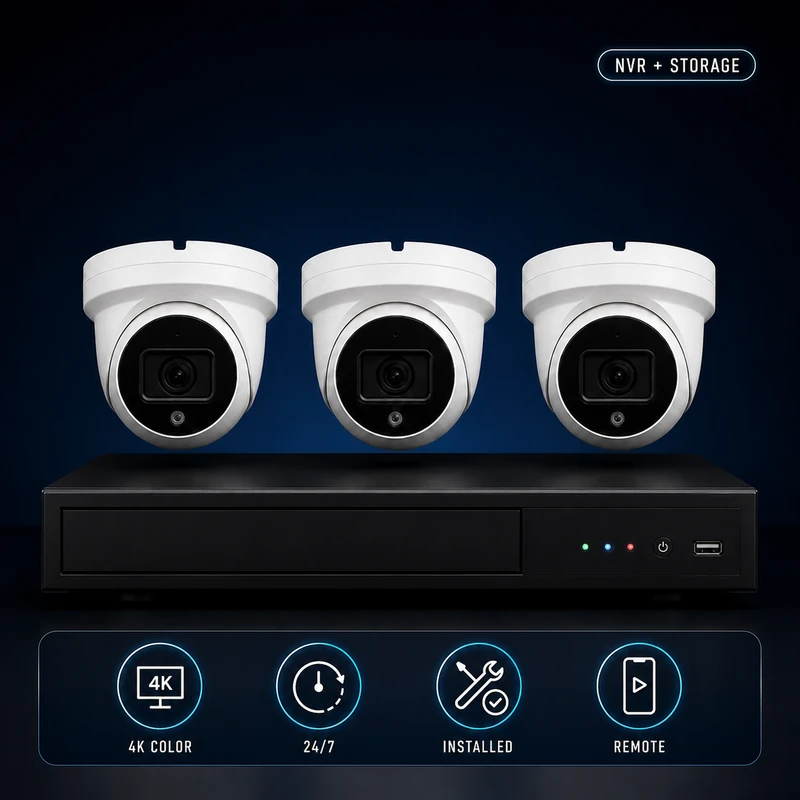
(3) 4k Camera Security System Bundle – Complete Installation & Remote Viewing Setup
$1,450.00$1,737.95 -
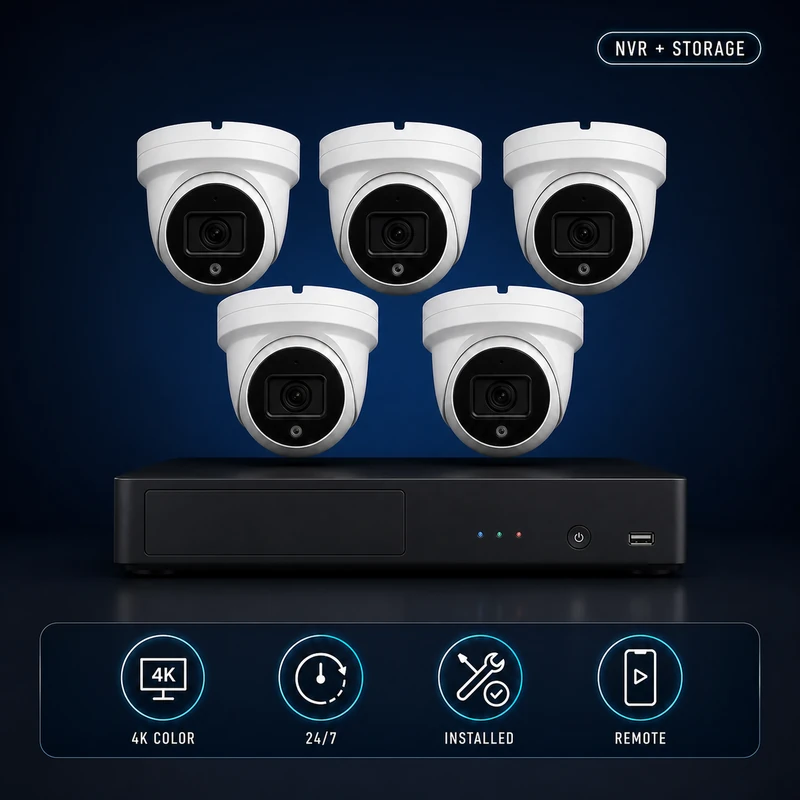
(5) 4k Security Cameras + PRO Installation Bundle
$1,900.00$2,426.93 -
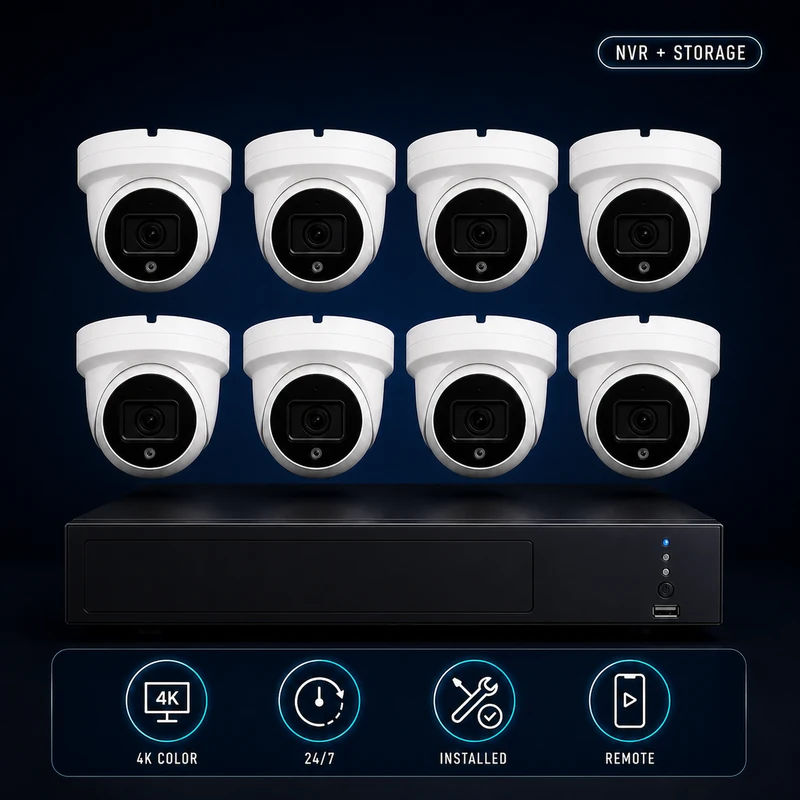
(8) 4k Security Cameras + PRO Installation Bundle
$2,712.00$3,527.90 -
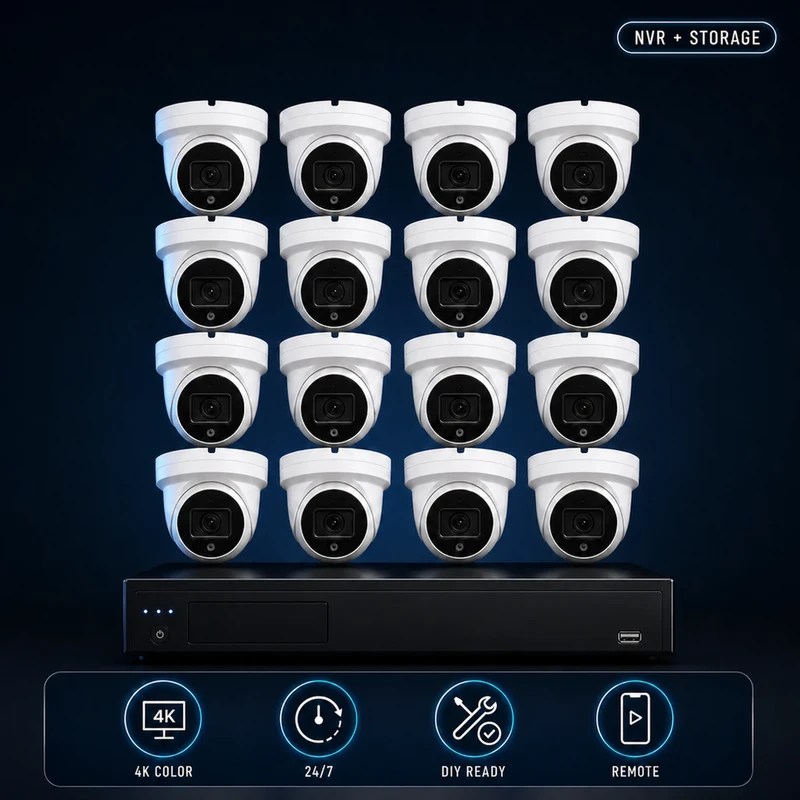
SecureView Standard™ 16 Camera Security System
$3,341.00$5,809.67
Frequently Asked Questions
Are wired security cameras more reliable?
Yes. Wired cameras are connected directly through Ethernet cables, making them far less susceptible to signal interference than wireless systems.
Can wired cameras work without internet?
Yes. They continue recording locally to the NVR even if internet service is interrupted.
Are wireless cameras easier to install?
Absolutely. Most wireless cameras are designed for DIY installation and require little more than mounting the camera and connecting it to WiFi.
Which system do professional installers recommend?
Most commercial and professional installations rely on wired PoE security camera systems because of their reliability, image quality, and continuous recording capabilities.
Final Thoughts
Both wired and wireless security cameras can help protect your property, but they are designed for different needs. Wireless systems are convenient and easy to install, making them a good option for temporary or light-duty use. Wired PoE systems require more effort upfront, but they deliver the reliability, recording quality, and long-term performance that homeowners and businesses depend on every day.
When security truly matters, the system you choose should be one you can trust to work consistently—not just when conditions are ideal.